The need to make calculations: from the first calculators to the birth of computing
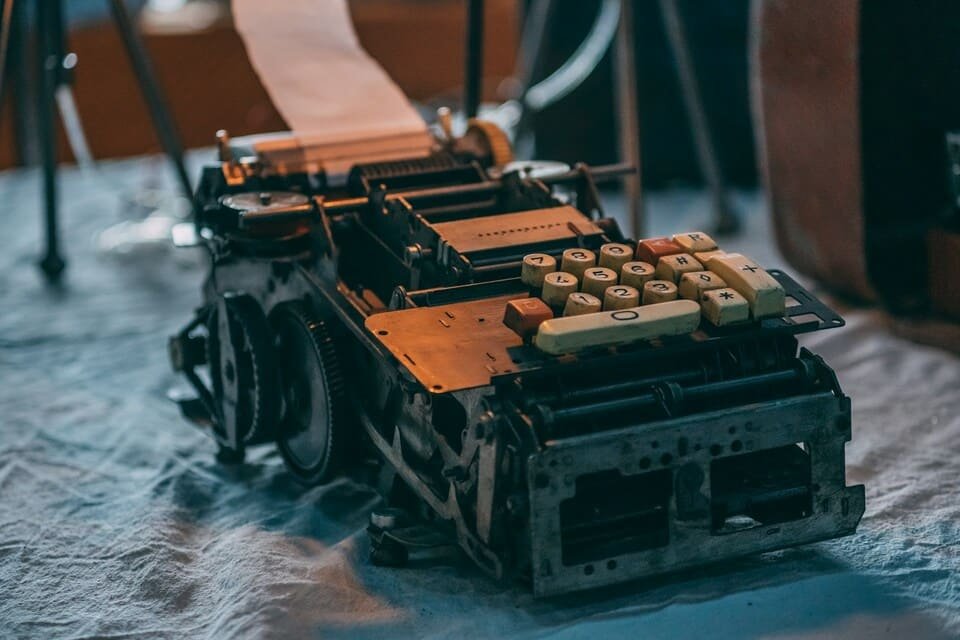
The origins of computing lie in a very recurring need that people have always seen in different contexts: the need to make calculations as precise as possible. Calculations are present in our daily lives and are necessary for many things: the functioning of commerce, the accounting of private companies, the collection of taxes by the State, statistics in the field of research, the preparation of plans for buildings and cities, etc. The world would not function in the same way without mathematics and man has always sought new ways to optimize calculation processes to meet this need.
The first calculators
In this context, in the middle of the 17th century, advances in mechanics allowed the appearance of the first calculators, which are an evolution of the traditional Chinese abacus, a calculating tool invented in 500 BC to help people perform mathematical operations.
The first mechanical calculator was created in 1623 by the German Wilhelm Schickard. This device used a system of gears that allowed additions, subtractions and multiplications, and also had a system that allowed the process of these calculations to be recorded, as if it were a memory. A few years later, in 1645, Blaise Pascal’s famous adding machine (the Pascaline) would also appear, and in the following years, many other mathematicians would try to surpass it. Among others, it is worth highlighting Leibniz’s machine, which at the end of the 17th century would establish the bases of the binary system that would begin to be used almost 300 years later with the arrival of the first electronic computers.
Differential analyzers
Alongside the evolution of calculators, which had a very accelerated pace throughout the 19th century, other calculation tools appeared to meet more specific needs, such as predicting tides. At the end of the 19th century, the first predictive machines were built: they were called differential analyzers and were capable of solving differential equations and responding to needs closely related to the military field.
As in the case of calculators, these devices also evolved over time, going from mechanical differential analyzers, used in the last two decades of the 19th century and the first two decades of the 20th century, to non-mechanical analyzers, which were created in 1920 with the integration of electrical circuits. The first electromechanical differential analyzers attracted the attention of the military, since they saw in them an opportunity to calculate the trajectory of their projectiles or the location of their aerial targets. However, beyond their use during the war, they were not very practical devices because they were too large and noisy.
The precursors of computers
The history of digital calculators or computers begins in the late 1930s, although it starts from earlier ideas such as the Jacquard loom, considered one of the precursor machines of computers. Invented by the Frenchman Joseph-Marie Jacquard at the beginning of the 19th century, this machine could be connected to a loom and use printed punch cards to “program” patterns that were then woven into the fabric. This idea from the textile industry was applied to all kinds of mechanical devices and inspired other creations as important as Charles Babbage’s analytical engine or the sorting machine that Herman Hollerith proposed as an administrative solution to process the United States population census that took place in 1890.
Charles Babbage was a scientist very interested in being able to make calculations automatically. He began to investigate how he could create a machine capable of doing these calculations by the method of differences, which converted any analytical function into different operations of addition and subtraction. The machine was called the Difference Engine and he presented two versions of it, one in 1822 and a second ten years later, but the budget needed to build it was too high and the British government was not interested enough to subsidize it.
During the process of creating the Difference Engine, Babbage also designed another machine that would have been more economical, but the project did not come to fruition either. It was the Analytical Engine, capable of performing any calculation that was indicated to it by a program using the punched card system. Thus, this machine was the design of a computer but, as has often happened throughout history, this scientist’s idea was too advanced for the technology of the time. The Analytical Engine had been designed only to perform calculations, but Ada Lovelace, who had started working with Babbage and is rightly considered the first programmer in history because she managed to introduce an algorithm into this machine, understood that the machine was not limited to performing numerical calculations, as indicated by notes written by herself.
Herman Hollerith was an American statistician who had been hired to meet an administrative need related to the difficulty of processing the population census. His solution was the design of a tabulator and a system of cards that greatly accelerated the process and that at the beginning of the twentieth century gave rise to the commercialization of several similar machines (tabulators, classifiers, verifiers, registers, etc.) and the creation of a large company that would have a monopoly on it (and which would later become IBM, with Thomas Watson as CEO). Business came out even stronger from the crash of 1929 and the policies implemented in the 1930s, and eventually tabulators made the leap from accounting to science, where calculations were also essential. So if Babbage had shown the way in the technoscientific field, Hollerith showed it at the business level.
The birth of computing
The technological advances that occurred during the first half of the twentieth century gave a final boost to the idea of a universal machine that Babbage had begun to imagine. Inventions such as the telephone were responsible for this: for example, the computing needs of the famous Bell Labs accelerated the evolution of calculators and the concepts introduced by Babbage’s machine, such as programs and program libraries, began to be used. While at Bell Labs this entire line of work was led by the mathematician George Stibitz, in Nazi Germany in 1941, Konrad Zuse also followed a similar path that led him to invent the Z3, the first programmable universal calculator.
Finally, IBM’s work with the collaboration of Harvard led to the creation of the Mark I, publicly presented in 1944, which was the first electromechanical computer and the last precursor of modern electronic computers. In this project we find the intention of building a universal machine, following the line marked by Stibitz, with the bases previously established by Babbage and an operation that was an evolution of previous machines and always had the final objective of meeting the needs of calculation.
It should not be forgotten that even the launch of the ENIAC (1946), considered the first general-purpose computer in history, also pursued the same goal as the first calculators, but taking advantage of all the technological advances: the aim of its designers was to make a calculation desktop computer that had the ability to perform much faster calculations (specifically, they initially wanted to perform calculations on the trajectory of bullets and artillery during World War II) and was electronic instead of mechanical. However, what they built was a real revolution.


